
Giles does a TEDx
Evening all, there is quite a lot this week.
First, the website has had a major overhaul. New copy, new images, updated navigation, improved structure and a fresh coat of fog. The homepage hero remains untouched. I like it too much.
Secondly, the Skeptiko will be online before the next Pips.
Next, the transcript of my TEDx talk is below. It’s a long read, but I thought it might be interesting to share before the video is released.
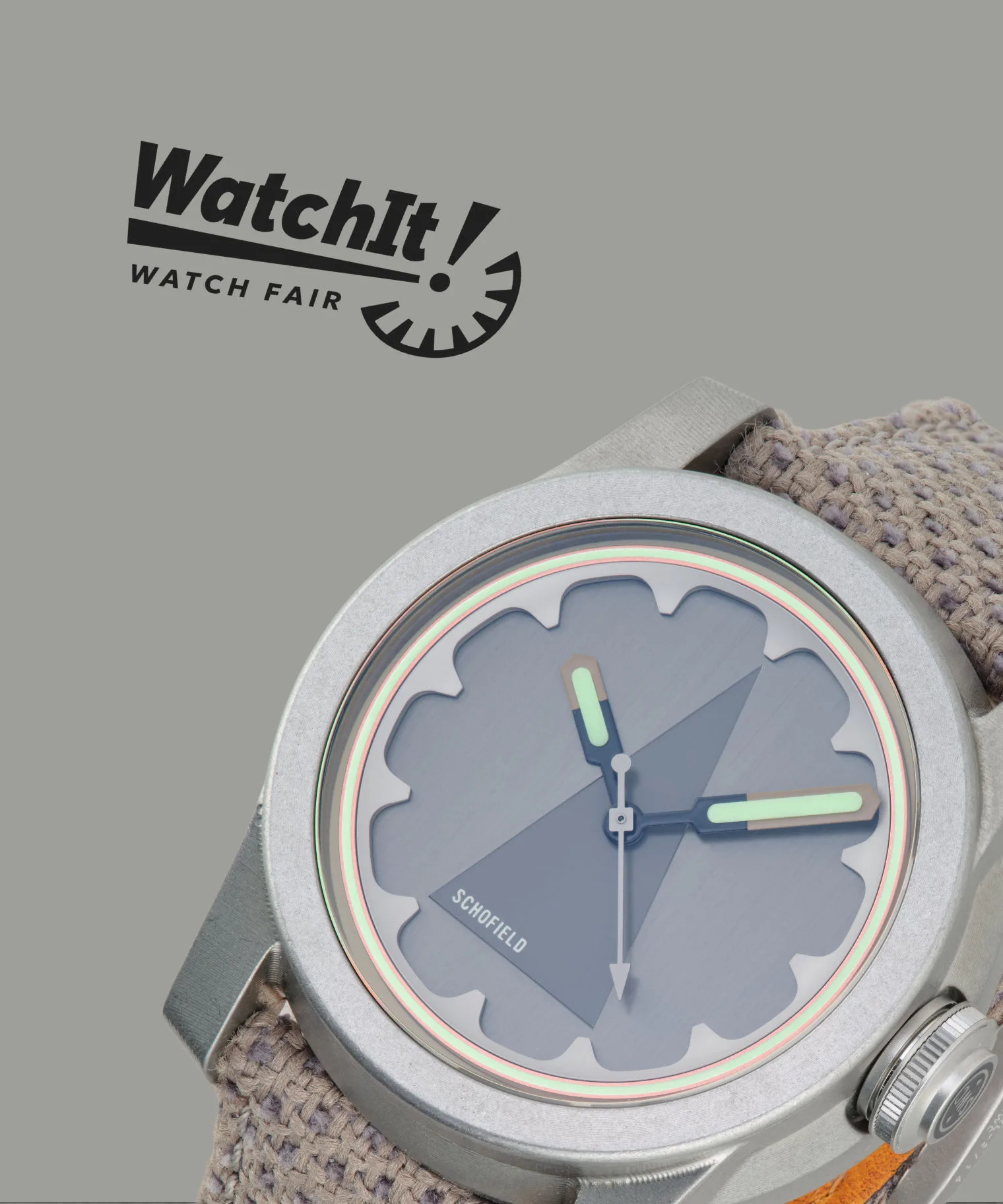
Finally, don’t miss the info on the Watchit! show in Solihull in a couple of weeks.
WatchIt! is a no-nonsense, hands-on watch event for real enthusiasts and watch lovers in the Midlands. June 20th 2026 voco St John’s Hotel, Solihull, Birmingham.
Come and see us! I will be there with stuff.
I found the first drawing of a watch case dated 2007. I remember doing it on my mum’s kitchen table discussing Panerai and Bell & Ross hand shapes with my brother.
This means watch design and manufacture has been occupying a high percentage of brain space for nearly 20 years!
I will not be doing a 20YR watch but I will do something. Perhaps a book – 20 Years of Abandoned Ideas..
You’ll see below some new buttons, they take you to some updated pages. The kind of pages that inform a little more deeply, I understand you have to be in the mood and if tonight’s not the night then they will be here next week.
Giles TEDx transcript
There is not enough matter in the universe to physically construct all the chairs that you could imagine.
This is true for all the spoons, spaceships, soups and sound systems.
The possibility space of things is infinitely greater than reality, because reality is but a tiny selection. Which fascinates me because, despite all of the possibilities, we humans decide what becomes real.
The process by which this happens is called design. And I think design is a far more important discipline than it is often given credit for.
Design is a bigger deal than arguing about how large the logo should be on a minimalist website. Or what shade of Colourplan stock your new business cards should be.
Design is the process by which ideas harden into reality. And when the designs accumulate, they become culture. I think much of modern culture is becoming less saturated, less rich, faster and less considered. Are we diluting culture? Are we losing its beauty?
The philosopher and complexity theorist Stuart Kauffman described something called “the adjacent possible“. The idea is that civilisation expands into possibility step by step. New inventions emerge from nearby inventions.
You could not have the smartphone in medieval England because the prior steps did not exist. You need electricity, semiconductors, batteries, touchscreens and so on.
Every object is evidence of that journey of steps. A church, a flip-flop, a printed leaflet.
A journey that begins with man’s first tools.
By the way, do you know what the ugliest thing ever made by man is? A single dirty turquoise Croc. Lonely and foul. It did not need to be this way, this shape, colour, weight or whatever. Those were all decisions. And let’s not forget that most of the things we interact with are not natural, so these are decisions made by people.
If the decisions we make as designers are not considered, are made under the duress of time or are driven by cost, then they are made poorly. And that carelessness, that foulness, accumulates into culture.
I design watches for a living. Which is quite absurd if you think about it. Human beings evolved on the African savannah trying not to be eaten by lions, and now we machine titanium into tiny wearable sculptures that tell the time to a precision our ancestors could not comprehend or even care about.
A mechanical watch is an extremely improbable object. To find one on another planet would almost certainly indicate intelligent life.
The physicist David Deutsch writes about how knowledge allows matter to take improbable forms. For a heap of atoms to become a watch, you need knowledge to shape them. A watch cannot spontaneously assemble under normal physical conditions because it is simply too many steps deep. Improbability is one of the great stories of civilisation. Because complexity above a certain point is human.
Future archaeologists would understand us from what we have designed. Surveillance cameras that speak of anxiety and fear. Devices that steal attention. Algorithms that confuse information with knowledge and attention with understanding. Because all these objects, and all the others too, can change our behaviour. This is where design stops being decorative and starts becoming ethical.
I’m not merely talking about making something environmentally friendly. I am talking about ethics being a foundational principle of design. All design should start here.
Road systems instruct us. Interfaces instruct us. A chair instructs posture, state of mind and authority. A city instructs loneliness or community. Very small things that we may think are insignificant instruct human behaviour, as we are seeing so gravely with social media and smartphone use.
The media theorist Marshall McLuhan famously said: “We shape our tools and thereafter our tools shape us.” I suspect this is true of almost everything we make.
And so we arrive at a disturbing fact: Out of all possible options… we chose this? This city? This interface? This housing estate? This plastic spoon? This font? This algorithm? This culture?
These were not accidents. Somebody else is responsible for our reality. Because of that, I think designers carry an enormous responsibility.
The designed world does not just reflect culture, it manufactures it. Some objects become lifelong companions while others feel disposable before we have even purchased them. You can feel when something was made carefully. You can tell when you are in harmony with a place or thing. Perhaps this is because beauty is not superficial.
Beauty is evidence of consideration within the design process. If not obvious, then there to be discovered.
The psychiatrist and philosopher Iain McGilchrist talks about modern culture becoming increasingly dominated by narrow attention. We accelerate and optimise everything. But in doing so we lose our sensitivity to wholeness and meaning.
I think objects can be designed to reveal this. We are extraordinarily sensitive to design even when not conscious of it. That badly lit room that changes your mood. Yet a beautiful object can survive generations. And this matters because human beings increasingly inhabit designed realities instead of natural ones.
Researchers estimated that the mass of human-made stuff on Earth exceeds all living biomass. Every road, building, device, vehicle and plastic thing combined now outweighs every plant and animal on the planet. We need to think about this.
Our ideas made real now outweigh nature. Maybe because there is so much pressure within such a large space of possibilities. All those ideas wishing they were real, good and bad.
Much of this manufactured world was not designed for meaning or beauty. It was designed for speed. To be temporary and convenient. And perhaps convenience is becoming one of the most powerful design forces in civilisation. But convenience is not always good culture.
When I was young, newly invented TV remote controls were seen as a threat to human health because they reduced activity. You would no longer get up to switch channels.
I remember that being ridiculous at the time, but it’s portentous now. Frictionless systems often produce frictionless thinking. Disposable objects produce disposable relationships. Infinite content produces overwhelming noise.
We live in a world so saturated with novelty and distraction that deep thought struggles to survive. How are we humans going to find elegant solutions to complex design problems?
Which brings me back to the beginning. There are more possible chairs than real chairs. More possible buildings. More possible cities. More possible futures.
This means the world around us is not inevitable. It is authored through billions of acts of design. Every object around you is a decision humanity made about what deserved to become real. And that’s the responsibility of a designer: to decide upon a reality. Because out of all possible worlds… we are building this one?There is not enough matter in the universe to physically construct all the chairs that you could imagine.
This is true for all the spoons, spaceships, soups and sound systems.
The possibility space of things is infinitely greater than reality, because reality is but a tiny selection. Which fascinates me because, despite all of the possibilities, we humans decide what becomes real.
The process by which this happens is called design. And I think design is a far more important discipline than it is often given credit for.
Design is a bigger deal than arguing about how large the logo should be on a minimalist website. Or what shade of Colourplan stock your new business cards should be.
Design is the process by which ideas harden into reality. And when the designs accumulate, they become culture. I think much of modern culture is becoming less saturated, less rich, faster and less considered. Are we diluting culture? Are we losing its beauty?
The philosopher and complexity theorist Stuart Kauffman described something called “the adjacent possible“. The idea is that civilisation expands into possibility step by step. New inventions emerge from nearby inventions.
You could not have the smartphone in medieval England because the prior steps did not exist. You need electricity, semiconductors, batteries, touchscreens and so on.
Every object is evidence of that journey of steps. A church, a flip-flop, a printed leaflet.
A journey that begins with man’s first tools.
By the way, do you know what the ugliest thing ever made by man is? A single dirty turquoise Croc. Lonely and foul. It did not need to be this way, this shape, colour, weight or whatever. Those were all decisions. And let’s not forget that most of the things we interact with are not natural, so these are decisions made by people.
If the decisions we make as designers are not considered, are made under the duress of time or are driven by cost, then they are made poorly. And that carelessness, that foulness, accumulates into culture.
I design watches for a living. Which is quite absurd if you think about it. Human beings evolved on the African savannah trying not to be eaten by lions, and now we machine titanium into tiny wearable sculptures that tell the time to a precision our ancestors could not comprehend or even care about.
A mechanical watch is an extremely improbable object. To find one on another planet would almost certainly indicate intelligent life.
The physicist David Deutsch writes about how knowledge allows matter to take improbable forms. For a heap of atoms to become a watch, you need knowledge to shape them. A watch cannot spontaneously assemble under normal physical conditions because it is simply too many steps deep. Improbability is one of the great stories of civilisation. Because complexity above a certain point is human.
Future archaeologists would understand us from what we have designed. Surveillance cameras that speak of anxiety and fear. Devices that steal attention. Algorithms that confuse information with knowledge and attention with understanding. Because all these objects, and all the others too, can change our behaviour. This is where design stops being decorative and starts becoming ethical.
I’m not merely talking about making something environmentally friendly. I am talking about ethics being a foundational principle of design. All design should start here.
Road systems instruct us. Interfaces instruct us. A chair instructs posture, state of mind and authority. A city instructs loneliness or community. Very small things that we may think are insignificant instruct human behaviour, as we are seeing so gravely with social media and smartphone use.
The media theorist Marshall McLuhan famously said: “We shape our tools and thereafter our tools shape us.” I suspect this is true of almost everything we make.
And so we arrive at a disturbing fact: Out of all possible options… we chose this? This city? This interface? This housing estate? This plastic spoon? This font? This algorithm? This culture?
These were not accidents. Somebody else is responsible for our reality. Because of that, I think designers carry an enormous responsibility.
The designed world does not just reflect culture, it manufactures it. Some objects become lifelong companions while others feel disposable before we have even purchased them. You can feel when something was made carefully. You can tell when you are in harmony with a place or thing. Perhaps this is because beauty is not superficial.
Beauty is evidence of consideration within the design process. If not obvious, then there to be discovered.
The psychiatrist and philosopher Iain McGilchrist talks about modern culture becoming increasingly dominated by narrow attention. We accelerate and optimise everything. But in doing so we lose our sensitivity to wholeness and meaning.
I think objects can be designed to reveal this. We are extraordinarily sensitive to design even when not conscious of it. That badly lit room that changes your mood. Yet a beautiful object can survive generations. And this matters because human beings increasingly inhabit designed realities instead of natural ones.
Researchers estimated that the mass of human-made stuff on Earth exceeds all living biomass. Every road, building, device, vehicle and plastic thing combined now outweighs every plant and animal on the planet. We need to think about this.
Our ideas made real now outweigh nature. Maybe because there is so much pressure within such a large space of possibilities. All those ideas wishing they were real, good and bad.
Much of this manufactured world was not designed for meaning or beauty. It was designed for speed. To be temporary and convenient. And perhaps convenience is becoming one of the most powerful design forces in civilisation. But convenience is not always good culture.
When I was young, newly invented TV remote controls were seen as a threat to human health because they reduced activity. You would no longer get up to switch channels.
I remember that being ridiculous at the time, but it’s portentous now. Frictionless systems often produce frictionless thinking. Disposable objects produce disposable relationships. Infinite content produces overwhelming noise.
We live in a world so saturated with novelty and distraction that deep thought struggles to survive. How are we humans going to find elegant solutions to complex design problems?
Which brings me back to the beginning. There are more possible chairs than real chairs. More possible buildings. More possible cities. More possible futures.
This means the world around us is not inevitable. It is authored through billions of acts of design. Every object around you is a decision humanity made about what deserved to become real. And that’s the responsibility of a designer: to decide upon a reality. Because out of all possible worlds… we are building this one?
✦ Peace